Every February, we observe National Cancer Prevention Month to raise awareness about the social and environmental factors that impact cancer risk and to empower patients with information and resources that support prevention, early detection, and intervention. In 2025, there were approximately 2 million new cancer cases and about 618,000 cancer deaths, averaging nearly 5,600 new diagnoses every day.¹ Alarming racial disparities persist in cancer mortality rates, with Black and Native American communities bearing a higher rate of cancer deaths than other racial and ethnic groups.² These statistics underscore an urgent need for equitable access to preventive care, health education, and early screening services, especially in communities of color.
Cancer risk is influenced by a host of factors, including access to quality health care, housing stability, environmental exposures, nutrition, and access to preventive services. These social determinants of health play a critical role in shaping cancer outcomes and often contribute to disparities in diagnosis, treatment, and survival rates among marginalized groups. While we cannot always control these external factors, research shows that lifestyle choices and preventive health behaviors can significantly reduce risk.
According to the latest American Association for Cancer Research Progress Report, approximately 40 percent of all cancers are associated with modifiable risk factors.³ This means that many cancer cases can be prevented through evidence-based strategies such as quitting smoking, maintaining a healthy weight, staying physically active, limiting alcohol consumption, receiving recommended vaccinations like HPV and hepatitis B, and participating in routine cancer screenings. By taking these steps, individuals can actively reduce their cancer risk and improve long-term health outcomes.
Early detection is equally vital. Regular screenings can identify cancer at earlier, more treatable stages before symptoms appear, leading to better outcomes and more treatment options. At Whittier Street Health Center, we offer a comprehensive range of specialty services to support cancer prevention, screening, and treatment. Through our partnership with Dana-Farber Community Cancer Care, patients can access mammography, genetic testing, no-cost lung cancer screening, tobacco cessation counseling, and referrals to leading cancer specialists. Our team provides expert care coordination, case management, and patient education to support you at every step of your health journey.
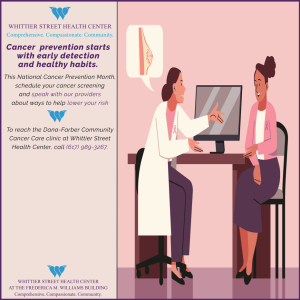
If you receive abnormal results from a cancer screening (such as a Pap smear or mammogram), if you are at increased risk of developing cancer, or if you have been treated for cancer in the past but are not currently established in care, your primary care provider may refer you to the Community Cancer Care Clinic for timely follow-up with one of our specialists. This National Cancer Prevention and Awareness Month, we encourage patients who may be at risk to start a conversation with their provider about available screening, prevention, and specialty care services. To learn more about our specialty services or to reach the Community Cancer Care Clinic, call (617) 989-3267 or visit https://www.wshc.org/services/specialty-care/.

References
- American Cancer Society. (2025). Cancer Facts & Figures 2025. Retrieved from https://www.cancer.org/content/dam/cancer-org/research/cancer-facts-and-statistics/annual-cancer-facts-and-figures/2025/2025-cancer-facts-and-figures-acs.pdf.
- Siegel, R.L., et al. (2025). Cancer statistics. CA Cancer J Clin; 75(1): 10-45. doi:10.3322/caac.21871.
- American Association for Cancer Research. (2025). Preventing Cancer: Identifying Risk Factors. Retrieved from https://cancerprogressreport.aacr.org/progress/cpr22-contents/cpr22-preventing-cancer-identifying-risk-factors/.