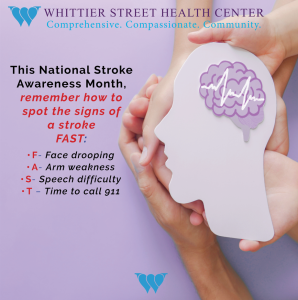
Observed every May, National Stroke Awareness Month exists to increase understanding of stroke, promote early recognition, and encourage prevention of what has been identified as the fourth leading cause of death in the U.S.
A stroke is a sudden blockage of blood flow to the brain, leading to potential brain damage, disability, paralysis, or death. Symptoms of a stroke include sudden severe headache, difficulty or inability to speak, weakness on one side of the face or body, and abrupt vision loss.
Strokes account for an estimated 163,000 deaths a year, with recent CDC and American Stroke Association data also indicating that roughly 795,000 strokes occur annually in this country, and an alarming 7.8 million adults are living with a history of stroke.
Risk factors include diabetes, hypertension, smoking, heart disease, high cholesterol, and a sedentary lifestyle.
The disparity of those at greater risk of a stroke is well documented. According to the CDC, the probability of a first stroke for Black adults is nearly twice as high compared to White adults and Black adults are 45% more likely to die from stroke than their White counterparts.
This imbalance isn’t based on biological factors alone. Social detriments, access to care, environment, chronic stress, limited availability to healthy foods all contribute to these disturbing outcomes. Given the disparities in stroke outcomes, early detection and rapid response is critical to life-saving treatment.
The American Stroke Association and the Heart Association recommend using the acronym BE FAST to determine if someone may be having a stroke.
Balance: Sudden loss of balance or coordination
Eyes: Sudden trouble seeing in one or both eyes
Face drooping: One side drooping or feeling numb.
Arm weakness: Sudden weakness or numbness in one arm
Speech difficulty: Slurred speech or difficulty speaking
Time to call 911
Whittier Street Health Center supports stroke prevention and management through its adult medicine, geriatric, chronic disease, cardiovascular, and wellness services, all of which target major stroke risks. We’re here for you, providing culturally responsive, community-rooted care that expands access, strengthens trust, and advances health equity for all.