Blog
Tackling the Social Determinants of Health
National Minority Health Month: Tackling the Social Determinants of Health
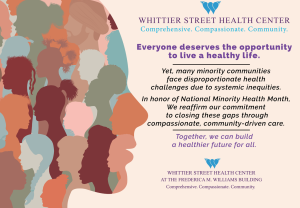
Recognized as an initiative to address the health needs of people of color, National Minority Health Month is observed each April. While the goal of this inclusive observance is to eliminate the disproportionate number of early death and preventable illness in minority populations, it also serves as a reminder that many health challenges faced by patients of color are influenced by more than medical conditions. They are shaped by social determinants of health (SDOH) – from access to safe housing and nutritious food to transportation and community resources.
According to a 2024 study conducted by The Independent Source for Health Policy Research, Polling and News, Black and Hispanic people fare worse than white people across most examined measures of health and health care. Eye-opening statistics point to:
- Black people had a shorter life expectancy (74 years) compared to White people (78.3 years) as of 2023
- Black infants were at least two times as likely to die compared to White infants
- Pregnancy-related mortality rates are more than three times higher among Black women compared to White women
- Black and Hispanic adults with mental illness were 19 % and 14%, respectively, less likely to receive mental health services as of 2024
- Hispanic and Black households were roughly twice as likely to experience food insecurity as White households
These statistics reflect well-documented racial and ethnic disparities in this country and the social factors that strongly shape health outcomes. Structural racism, economic inequality, deficient access to health care, limited nutrition resources, and chronic stress are all interconnected imbalances resulting from systems that can and must be changed.
Whittier Street Health Center is dedicated to being part of that change by centering our mission on health equity, culturally competent care, and programs that reduce disparities. Our comprehensive primary care services, health screenings, and social and wellness programs are designed to promote lifelong well-being within the diverse populations we serve.
While medical care anchors our work, confronting the root causes of health disparities is at our heart.
Reference
KFF The Independent Source for Health Policy Research, Polling, and News (Dec. 16, 2025)
Retrieved from Key Takeaways – Key Data on Health and Health Care by Race and Ethnicity | KFF
Graphic Design by @Devin Williams